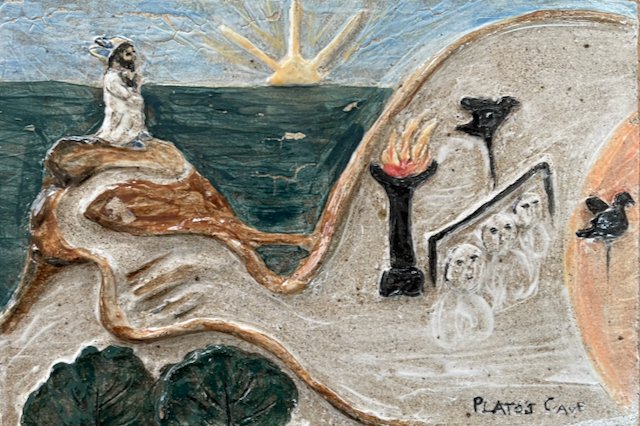
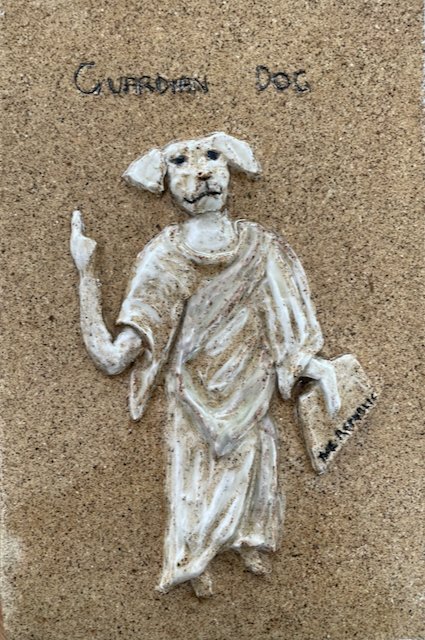
BOOKINGS NOW OPEN For Part 2
Starting Tuesday 18 August | Online only
Part Two Class Times: 6.30 to 8 pm Tuesday 18, 25, Aug and 1, 8, 15, 22 Sept 2026
Venue: Online only
Online with zoom: zoom link for all classes in Part 1 and Part 2
In case of internet disruption dial-in +61 3 7018 2005 | Meeting ID: 832 1551 6772 | Passcode: 809973
Course outline and weekly readings with options for access to texts
Catch-up class recordings
Go to the YouTube playlist for all recordings or follow the links below
Week 1.1
Week 1.2
Week 1.3
Week 1.4
Week 1.5
Week 1.6
A copy of the Economist Article (paywall) mentioned by Susanne: “Why big AI labs are hiring so many philosophers“
Week 2.1
| We began Part 2 by revising the socio-political dimensions of the Republic in the light of Benjamin Studebaker’s Timewell Lecture (recording). Studebaker’s approach is premised on the authenticity of the 7th Letter. Penguin books used to publish a most readable translation of this letter by Walter Hamilton that you might get hold of. To introduce the discussions of Forms, we also considered this letter’s famous short passage on the five levels of knowledge/reality (extracted here). |
Week 2.2
_________________
Week 2.3
_________________
The Golden Ratio hidden in The Republic
On the esoteric Golden Ratio in The Republic, here is a quote from a sly message to a geometry class long ago:
… So that is why this course is called “esoteric.” But such claims should only be taken so far. The wilder claims should be left well alone.
And that is why I suggest you best avoid the next one. Or else keep quiet about it. Certainly don’t tell your friends or they would likely band together and rescue you from this Plato Cult.
After 2400 years it had been discovered how Plato hid perhaps the most deadly Pythagorean secret in his Republic.
The discoverer seems to be John Bremer — with Jay Kennedy confirming it and finding other symmetries. This SWEP page and podcast can serve as an a good introduction.
Don’t say I didn’t warn you!
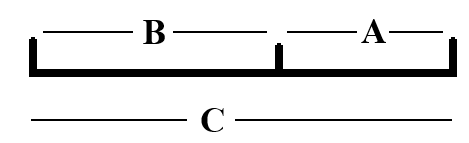
A is to B as B is to (A + B).
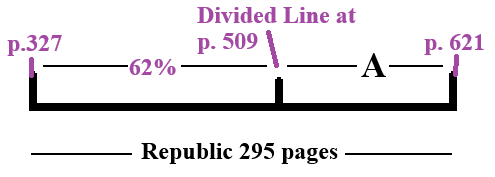
A line divided in this ratio can be seen as the origin (arche) of an emanation by proportion (ana-logia) where the ratio (logos) of the emanation is immanent — that is, the logos is the arche as the line so divided (cf. the prologue to John’s Gospel).
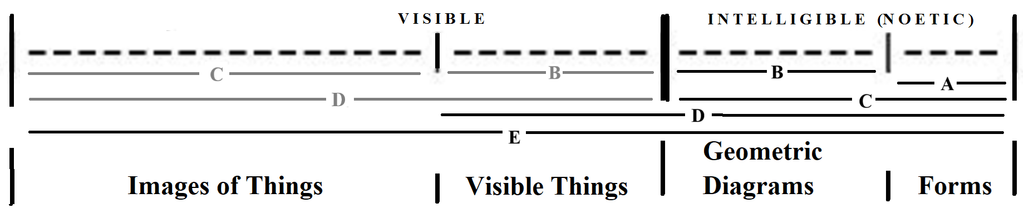
The emanation can continue as a contraction or an expansion. The above diagram can be interpreted as showing the expansion as the geometric progression by Golden Ratio: A, B, C, D, E …
Now, let’s take it from the top as per the instructions at 62% of the way through The Republic: the whole line is cut so that C (NOETIC) is to D (VISIBLE) as D is to the whole line (C + D). These two segments are next cut in the same ratio so that, on the right, A is to B as B is to C. On the left, B is to C as C is to D. This means that every segment is related to every other segment by the same Golden Ratio of the original C to D cut, which is the same ratio of D to the whole line!
Week 2.4
Week 2.5
Week 2.6
Artwork by Barbara and Janet